Brothy ramen
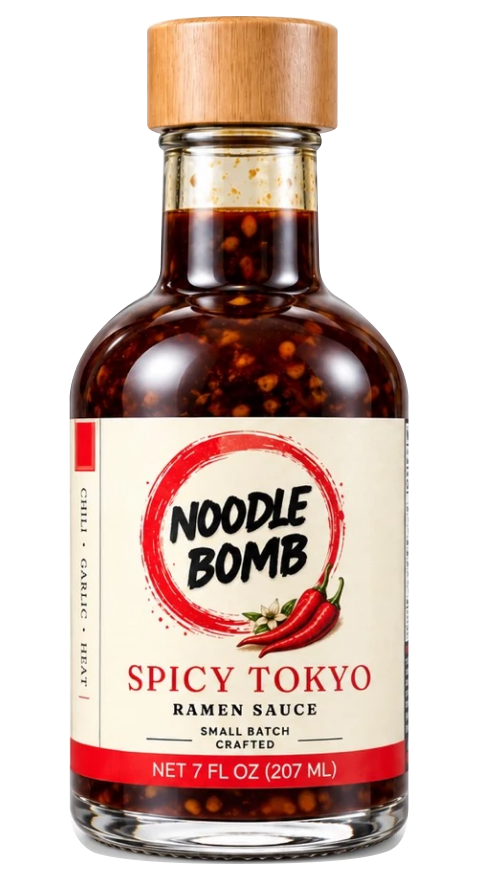
Stir Spicy Tokyo into hot broth or spoon it over the finished bowl with soft egg and scallions.
THE NOODLEBOMB KITCHEN
Spicy Tokyo is built for noodles that need heat and umami at the same time: ramen, udon, rice noodles, cold noodles, and fast stir-fry bowls.
Stir Spicy Tokyo into hot broth or spoon it over the finished bowl with soft egg and scallions.
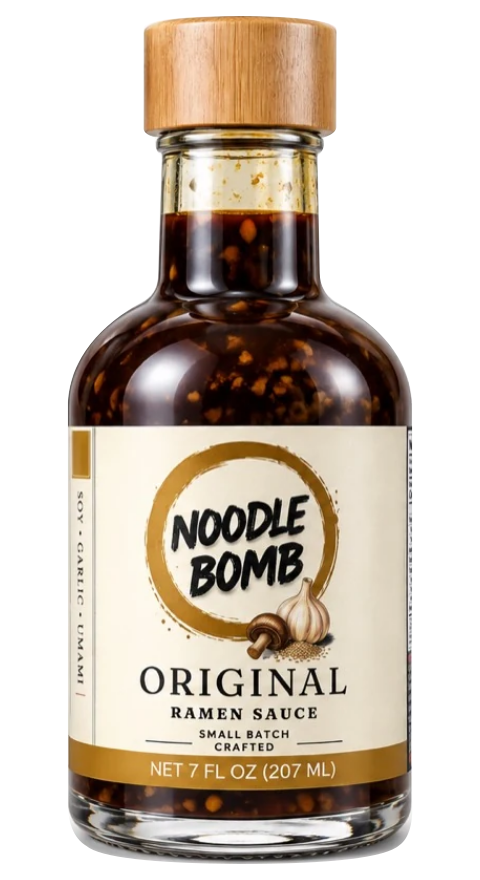
Start with Original for the garlic-sesame base, then finish with Spicy Tokyo when the pan needs heat.
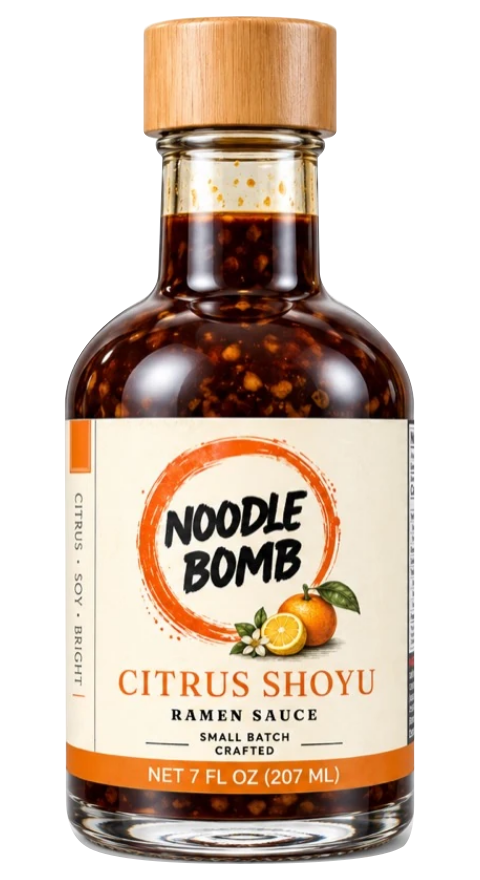
Citrus Shoyu adds brightness; Spicy Tokyo brings the chili-garlic finish with cucumber and sesame.
Use Spicy Tokyo when the bowl needs roasted chili, garlic, sesame, and soy depth. Keep Original nearby for a mellow garlic-sesame base, or grab the Trio when you want spicy, bright, and everyday noodle paths covered.
Spicy Tokyo. It brings roasted chili, garlic, sesame, smooth soy, and deep umami in one pour.
Start with 1 tablespoon per serving. Use 2 tablespoons when you want a stronger bowl.
Yes. Cook the noodles, drain most of the water, then toss in Spicy Tokyo before adding egg, scallion, sesame, or vegetables.
Stir-fry sauce for noodles · Spicy sauce for rice bowls · Spicy sauce for dumplings
MAKE IT WORK TONIGHT
Use less Spicy Tokyo for the first toss, taste, then add more. It is easier to add heat than remove it.
A splash of noodle water loosens a thick coating. Keep the pan heat moderate once the sauce goes in.
Cool cucumber, crisp cabbage or an egg gives a spicy bowl another texture. Check topping labels and remember the sauce contains soy, wheat, milk and sesame.
Original, Spicy Tokyo and Citrus Shoyu contain soy, wheat, milk and sesame. Read the product details before choosing your sauce.
Spicy Tokyo Ramen Sauce brings roasted chili, garlic, sesame and soy depth. It is the ramen sauce used in this guide.
Spicy Shoyu Soy Sauce brings soy depth with red pepper and datil pepper. Choose it when you want a spicy soy sauce for noodles or a dipping dish. The bottles have different formulas: check each product page for ingredients and allergens.
For the soy sauce method, follow our soy sauce for noodles guide.